Zimbabwe Community Empowerment –Dreaming the Possibilities
Rotary 3H Grant 66890 - Update May 2011
In Zimbabwe, success isn’t measured only in terms of dollars, numbers of people
involved, or even outstanding business plans. Success is also measured by renewed
energy and excitement, new connections, skills and influence on the whole community.
If you ask the people in the Zimbabwe Community Empowerment Program, they say
that they are experiencing that “sweet smell” of success. They talk about self-esteem,
trust and finding their own voices…about sharing their knowledge and skills and
becoming leaders. They are seeing the future that they never before dreamed of.
Rotary 3H Grant 66890—Zimbabwe Community Empowerment—began in October 2009 in six high-density communities in Harare, Zimbabwe’s capital. Training and creating a framework for success is at the heart of the program: creating and mentoring Self Help Groups (SHGs) for income generation, Youth Friendly Corners that re-engage youth into the community through skills training, computer access and AIDS awareness, and a Living Well with AIDS program to help people cope with the disease. Close to 2,000 people have been trained so far.
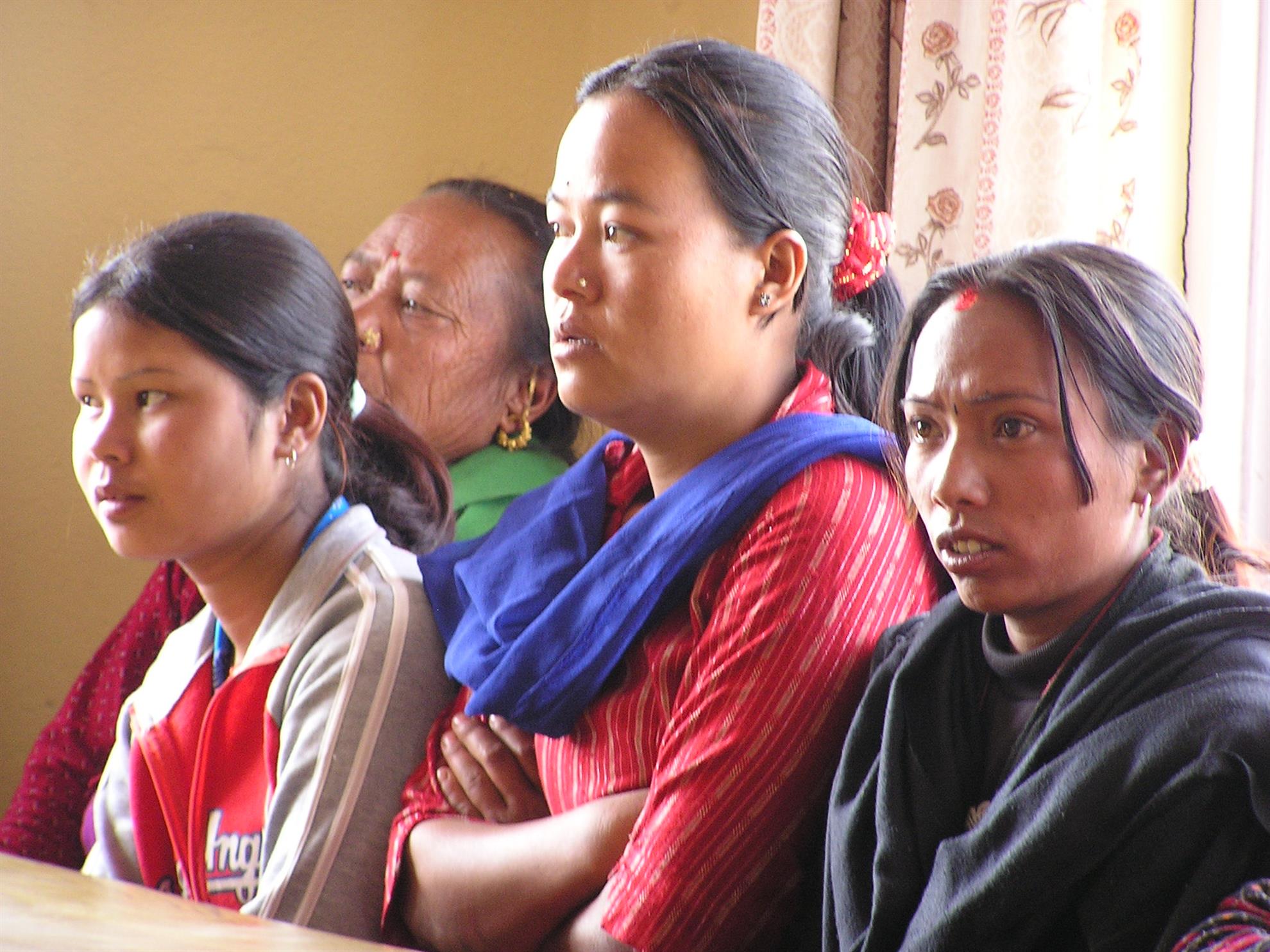
Over thirteen hundred people, mostly women, have been trained in basic economic skills
and are members of more than 100 SHGs. They have gone through 13 weeks of training
with guidance from trainers, hands on oversight by community-based grant
coordinators and, in many cases, advice from Rotarian mentors. Most have started group
businesses: sewing, poultry, tie-dye, trading. One key to their success is the emphasis
on building up their savings, rather than using outside loans, to fund their businesses.

With self-sufficiency, leadership and strong bonds within their group, these women see themselves as equipped to transform their lives and their communities. The first SHG leaders are now creating Clusters to take on the oversight of their groups and eventually the entire SHG program. These leaders are also starting to identify community needs that they want to address. One woman describes the change: "The training has helped us have trust in each other. I now have my own money—I didn't think that could happen.” Another says: "I no longer think of myself as poor. There is a richness in what we are doing."
Groups are becoming increasingly confident as they negotiate with the local officials for
space for selling their wares, raising poultry and making their products. They are
meeting with local businesspeople to learn about improving quality and marketing to a
larger clientele. They continue to save and reinvest their profits into their businesses.
Even those members who choose to focus on their personal businesses say that the
experience has given them a confidence and sense of self worth that they never thought
possible.
The Youth Friendly Corners are also becoming a powerful voice in the communities. Ten Youth Corners have been opened, managed by young people trained as peer counselors in AIDS prevention as well as in computer and leadership skills. The Corners are a place for young people to gather, to develop incomegenerating activities as well as energize their peers.
The Youth Corner in Budiriro has taken the leadership in offering computer skills training, creating resource material for the participants and encouraging them to share their knowledge with the other Corner members. Garikai Makore is one of volunteer trainers. He is doing this, he says, because he believes that the youth need to be re-engaged. When asked how long he will continue the training, he said: “I’ll teach them as long as they’ll let me.”
A focus on AIDS is a significant element of the Community Empowerment Project. In
addition to the AIDS prevention training that the Youth Corners provide, there is Living
Well with AIDS, a program to help people who are HIV positive learn to self manage
their disease. Thirty-six people have been trained as leaders and more than 300 HIV
positive persons have participated in the Living Well (LW) program. Some of these LW
groups have subsequently gone through Self Help Group training. They are finding that
a combination SHG/LW Group gives them the opportunity to focus on their specific concerns: business training and support for their health limitations.
Members of the SHGs have also volunteered to be peer educators for their group members in addressing AIDS prevention. They participated in a weeklong training and are now facilitating weekly discussions in their groups on ways to prevent and cope with the disease. These are especially helpful in giving the group members a forum for discussing ways in which to reduce the incidence of AIDS in their communities.
A key element of the Zimbabwe Community Empowerment is sustainability—continuation of the project after the Rotary funding has ended. The ownership that the women and the youth have already shown, the ways in which they have adapted the program to reflect their interests and commitment, and their excitement with each success—these are things that create the hope that this program will continue to change the lives in Zimbabwe forever. The sweet smell of success is in
the air.
Please contact us for more information about the program and opportunities to participate.
Carolyn Schrader schrader407@gmail.com.
Photos by R Springer and C. Schrader; all rights reserved.
______________________________________________________________________________
Interesting video link to a program about Haiti - one year after the earthquake . . .
(Copy and paste the link below to your internet browser.)
Subject: Haiti
Given the recent support of the DMHR WCS committee for my Haiti project (i.e., vocational training in Leogane), I thought you might enjoy this show on Haiti that was done on Wednesday - the anniversary of the January 12th quake. The host of the show is Tamara Banks and the others that are interviewed are Jodel Charles (his parents are physicians and own the CAMEJO hospital campus where I'll locate our vocational training project) and Rich Harris (a Denver Rotarian and family lawyer).
http://video.cpt12.org/video/1742481743
Blair
________________________________________________________________________________
Rotary 3H Grant 66890
Transformation in Zimbabwe
Update Nov, 2010
If you dream amazing things, sometimes they come true. Zimbabwe is a place where that is happening. Talk to the people in Mufakose, a suburb of Harare, about Rotary’s Zimbabwe Community Empowerment project and you’ll see what I mean. Even the people on the street say things have changed: “The women are so different after just a few weeks. They smile and laugh; they walk with their heads high.” A woman in the program for three months says: “The training has helped us have trust in each other. I now have my own money—I didn’t think that could ever happen.”

Rotary 3H Grant 66890—Zimbabwe Community Empowerment—began one year ago in October 2009. This Rotary project will train over 4,000 people in four years—working in and with the community to meet what the people of Mufakose said are critical needs: creation and mentoring of Self Help Groups (SHGs) for income generation, a Living Well with AIDS program to help people cope with the disease, and the formation of Youth Friendly Corners that offer young people the skills to mobilize their peers to prevent AIDS and re-engage with their community. Almost 1,500 people have been trained so far.
Nine hundred people, mostly women, have been trained in basic economic skills and are members of 70 SHGs. Many have started their own group businesses: sewing, poultry raising, tie-dye and trading. One group member said: “The training has taught us to save money and understand what we need to do to make our business succeed.” Some groups have saved over $1,500 and have invested that money in equipment and supplies for their businesses. The more recent trainees are developing business plans and learning advanced business skills through focused training given by Rotarian volunteers. Significant contributors to their success are the Harare Rotarians who act as mentors to SHGs as they develop their business plans and get their businesses started.

A new training program began in October 2010 to give more information about HIV/AIDS to the members of the SHGs. Peer educators were selected from SHG I
and SHG III (groups that were created in October 2009 and September 2010). These women received weeklong training in HIV/AIDS and the facilitation techniques to teach this information to their fellow group members. This is an important addition to the program to empower the women to avoid AIDS and to share their knowledge with their family and community. The peer educators began sessions with their groups at the end of October.
One of the most exciting elements of the Grant is the Youth Friendly Corners. Over 250 youth have been trained to be AIDS peer counselors and to operate 10 Youth Corners. At their two-week training these young people learn about HIV/AIDS, leadership, running the corners (at sites provided by the local government), and creating a business. These youth also have access to computers and printers—and Internet access soon—provided by the Grant at each site.

An amazing new development was initiated by youth trained in 2009 to supplement Grant activities with a weeklong training program on computers. Their program began in mid November and will significantly enhance the skills of the Youth Corner participants. Another significant step forward is the expansion of Youth Corners into two new communities because of the demand there. Forty youth showed up for 25 slots at the first day of training at one of the new sites. The enthusiasm for the Corners and the energy of the youth involved with them is extraordinary. They are committed to helping each other and sharing the message of AIDS prevention.
The Living Well with AIDS program started in May 2010 and has trained 36 community members as leaders and has created 24 Living Well support groups. All participants in the groups are HIV positive and are learning how to self manage their disease. There are now over 300 people in the Living Well program.

A key element of every Rotary Grant is sustainability—continuation of the project after the Rotary funding has ended. Two important steps were taken in October to work toward that goal.
The first was the creation of Self Help Group Clusters, where leaders of the groups formed an organization that will take over the oversight of SHG I and begin to reach out to partners in the community for support and advancement of the groups. The leaders were excited about this chance to lead their groups to a new level. All SHGs will eventually joint together into Clusters.
Even more significant is the creation of a Rotary Community Corps (RCC). Several Mufakose leaders have already agreed to be part of the Corps and are working with Harare Rotarians to identify other charter members of the Corps. Within the next few months, the RCC will be registered and begin to operate. The RCC will be the key link between the community and local Rotarians and will eventually oversee and sustain the entire Grant project.
The transformation is in motion and it is beautiful to behold. For more information, contact Carolyn Schrader schrader407@gmail.com.
The Greatest Thing Since Independence
Rotary Clubs in District 5450, District 7120 and District 9210 in Zimbabwe jointly are sponsoring a Rotary 3-H Grant in Zimbabwe. Robin Springer and Carolyn Schrader from Denver Mile High just returned from the Launch of that Grant in Harare, the country's capital and wanted to share with you the incredible power of Rotary, even in a difficult country like Zimbabwe.
We were privileged to participate in the Launch of the Grant-Community Empowerment in Zimbabwe-on October 3. There were 2,000 people attending, including the Governor and Mayor, local government officials, 20 Harare Rotarians, three US Rotarians, and a former Rotary District Governor. The Social Services Coordinator said it may have been the greatest happening since Independence.
The Prime Minister Mr. Morgan R. Tsvangirai and the Minister of Health and Social Services had planned to attend as well, but they were called away for a Cabinet meeting at the last moment. PM Tsvangirai's speech, read by the Governor, emphasized the Rotary connection and the importance of this project in both the local community and throughout all of Zimbabwe.
The impact of the 3-H Grant, which addresses Health, Hunger and Humanity, will be huge. Over 4,000 people will be trained in 3 ½ years, with programs for women's and youth's economic groups, Youth Resource Centers, and self-management for people living with HIV/AIDS. But the Grant provides so much more: a structure and ongoing training that will gradually transfer operational responsibility from the Grant to the community. By providing both the skills and the structure to the participants, the Grant will create a self-sustainable program.
An important element of this Grant is the enthusiastic participation of the Harare Rotary Clubs. There are seven Harare Clubs actively involved with the Grant, and the Zimbabwe Grant Committee oversees the training provided by ICA Zimbabwe, as well as the Project Officers and the Program Coordinator. This Committee also manages the $330,000 in Grant funds from The Rotary Foundation.
One of the most exciting parts of the Grant is the Zimbabwe Rotarian Mentors. During our trip, we worked with two local Rotarians who will coordinate at least 30 Rotarians who will act as mentors to the Self Help Groups. These Rotarians will be advisors and coaches for the groups, helping the groups identify products or services that will be profitable for them. Considering the shifting economy in Zimbabwe, there can be no more savvy people to help the groups than Rotarian businessmen and women. And they are truly excited about the chance to participate in this incredible opportunity. One of the local Rotarians has taken on the role of Market Advisor to both track the economic enterprises of each Group and work with businesses to connect the Groups to potential new opportunities.
There are many elements that need to come together to make a project like this work. We have worked with the Harare Rotarians to create a Trust that will administer the Grant, develop detailed budgets and payment processes, create a base-line questionnaire to collect data for eventual tracking of the impact of the Grant, and tailor training material to meet the specific purposes of the project. We participated in Committee meetings for PR, Monitoring, Evaluation, Finance and Operations. We met with the Marketing Committee to develop a consistent message for all Grant communications to maximize awareness and understanding of the Grant.
While we were in Harare, we interviewed more than 30 people about the Grant and its elements-past and potential participants, trainers, Rotarians, administrators. We visited the Grant sites, met some trainers and the Project Officers who will monitor the activity on the ground. We visited five Rotary Clubs and made a presentation about the Grant to each one. At every Club members spoke to us afterwards and said how much they appreciated our efforts and that they wanted to be a part of the process.
The partnership between the Rotarians in Colorado, New York and Harare is amazing. We are working as a team and somehow it is all coming together. The training started the first week in November; every participant had a training manual and was eager to get started. 24 Self Help groups have been created; in December four Youth Corners, outfitted with trained young men and women, computers and other equipment, will begin operating.
There were so many wonderful moments during the two weeks we were there. One of the best happened after the meeting about the mentors. One of the Rotarians, DJ, said to us: "You come so far, all the way from the US, and immediately go to the high density neighborhoods where the project will happen. These are places where many of us who live in Harare are nervous to go. Your willingness, your determination--this completely inspires us. It makes so many of us want to be fully engaged as well."
The strongest message that the Rotarians in Harare sent back with us was to bring more Rotarians. They are great hosts and love this visible evidence of our support for them and belief in the project. Please contact Carolyn Schrader at schrader407@me.com for more information about how you can take a trip to Zimbabwe to work on the Grant.
Carolyn Schrader
Dec. 7, 2009
|
The World Community Service Committee is responsible for the oversight of projects in other countries, generally in coordination with Rotary Clubs in other parts of the world.
|
|
Documents:
|
|
| |
|
|
|
|
|
|
| |
|
|
|
|
|
An update on our water project in Rukubi, Kenya:
|
| |
We fund a lot of our work with Matching Grants from RI. Take a look at our Matching Grant submittal for the Rukubi water project to see what one looks like.
Learn more about 3-H Grants, which we may use to fund larger projects in the future.
|
|